
The Surprising Persistence of Fax in Government Operations
September 1st, 2026 by admin
Fax wasn't adopted by government offices out of habit. It was built to solve a specific problem: how to move a document from one place to another, point to point, with proof that it arrived. When fax entered widespread use, email and the internet as we know them didn't exist. Fax delivered something no other transmission method could - a confirmed, timestamped delivery over a closed telephone circuit that courts, regulators, and counterparties would accept as a legal record.
That original design still does a few things other sending methods don't. It works with any phone line and any fax-capable machine, with no accounts, software, or proprietary platforms required. It operates outside internet-connected networks. And it produces a transmission confirmation that has stood up in court for decades. Cloud faxing didn't replace any of that - it delivers every one of those capabilities while adding what traditional fax never had.
What Traditional Fax Was Built to Do
A Transmission Standard Regulators Recognize
Fax was designed around the Public Switched Telephone Network (PSTN) - a closed, point-to-point transmission system that many regulations consider inherently secure. Because fax predates the internet, the compliance frameworks government agencies operate under were written with fax as an explicitly authorized transmission method. Agencies dealing with healthcare information must comply with HIPAA, which specifically recognizes fax as an acceptable way to send protected health information. Agencies handling legal documents rely on statutes that explicitly authorize fax delivery.
Email and other internet-based methods, by contrast, had to be retrofitted with additional security measures to meet the same compliance standards. Fax earned its place in the regulatory framework because of how it was built - not despite it.
Proof of Delivery, Built In
Fax was built to do something mail and couriers couldn't: confirm, in writing, that a document reached its destination. Every transmission generates a report with timestamps and confirmation codes - an audit trail that has stood up in court for decades. That proof of delivery is not a side benefit of fax; it is the core function the technology was designed around.
Government agencies regularly deal with court filings, interagency communications, and citizen requests that require ironclad documentation. The decades of legal precedent supporting fax transmission records are exactly why agencies that treat documents as evidence, not just messages, have kept fax in the workflow.
Security by Isolation
Traditional fax is isolated from internet threats by design - it predates the internet, so it never depended on it. Fax transmissions travel over telephone circuits that exist outside internet-connected networks, outside the reach of ransomware, phishing, and the other digital attack vectors agencies face daily. For agencies handling sensitive information, that separation is the point of the technology, not an accident of its age.
When transmitting citizen social security numbers, law enforcement information, or procurement documents, the closed nature of telephone line transmission reduces exposure to the data breaches that plague internet communications.
Works with Any Phone Line
Fax was built as an open standard. Any fax-capable machine can talk to any other fax-capable machine over a plain telephone line - no accounts to create, no software to install, no proprietary platform in between. That universality is what made fax the default method for official document exchange in the first place.
For government agencies it still matters. Agencies must communicate with diverse constituencies - citizens without reliable internet access, small businesses on limited technology budgets, rural communities, populations with limited digital literacy. A citizen shouldn't need a smartphone or email account to communicate officially with their government, and with fax they never did.
The Problems with Traditional Fax Technology
While the reasons for fax persistence are legitimate, traditional fax machines create significant operational challenges for government agencies:
- Physical infrastructure costs: Maintaining dedicated phone lines, fax machines, toner, and paper creates ongoing expenses that strain already tight government budgets.
- Space requirements: Physical fax machines occupy valuable office space and require dedicated locations for incoming document collection.
- Operational inefficiency: Staff must physically retrieve faxes, manually distribute them to appropriate departments, and maintain paper filing systems.
- Limited accessibility: Employees can only send or receive faxes from locations with physical machines, hindering remote work capabilities.
- Environmental impact: Paper consumption and toner waste conflict with sustainability initiatives that many government agencies have adopted.
- Security vulnerabilities: Faxes sitting in output trays can be viewed by unauthorized personnel before the intended recipient retrieves them.
How Cloud Faxing Delivers Everything Fax Promised — and More
Cloud faxing - also known as internet fax or eFax - meets every requirement traditional fax was built for and adds capabilities fax machines never had. It converts documents to standard fax format digitally, transmits them over secure internet connections to traditional fax machines or other cloud fax services, and preserves the confirmation reports and legal standing agencies depend on. eGoldFax, a secure enterprise cloud faxing solution, delivers all of it: compliance-grade security, proof of delivery, universal reach, plus the speed, automation, and control that no analog machine can match.
Same Compliance Standing, Enterprise-Grade Protections
Cloud faxing maintains the same legal and regulatory standing as traditional fax. Transmissions generate the same confirmation reports and audit trails that satisfy compliance requirements - with eGoldFax you always know whether a fax was successful or failed. Documents are converted to standard fax format (typically TIFF files) and transmitted using protocols that regulators recognize as equivalent to traditional fax.
The difference is what happens around the transmission. eGoldFax protects data with TLS 1.2 and HTTPS encryption and is PCI-DSS Level 1 compliant, exceeding the safeguards of a paper fax sitting in an output tray. For HIPAA compliance, reputable cloud fax providers offer Business Associate Agreements (BAAs). The transmission still occurs through methods regulations explicitly authorize - the process is simply handled digitally rather than through physical hardware.
Dramatic Cost Reduction
Cloud faxing eliminates the need for dedicated phone lines, fax machines, maintenance contracts, toner, and paper. Government agencies can redirect these budget dollars to mission-critical services. A single cloud faxing solution can replace dozens of physical fax machines across multiple locations, generating substantial savings even for small agencies.
Implementation is straightforward - agencies keep their existing fax numbers while routing them to cloud infrastructure. eGoldFax supports fax number retention with FCC-compliant porting, so switching to cloud faxing doesn't force citizens, vendors, or other agencies to update a single number. The HTTPS-secured admin portal lets administrators manage users, fax routing, reports, and the fax archive from one place, protected by two-factor authentication (2FA).
Enhanced Security and Control
Rather than faxes sitting in output trays where anyone might see them, cloud faxing delivers documents directly to intended recipients via encrypted email or secure portals. Low-cost Direct Inward Dial (DID) fax numbers route faxes straight to individual users, so sensitive documents never pass through a shared tray. Agencies gain centralized control over fax communications, with role-based access, retention policies, and comprehensive logging managed through the admin portal.
eGoldFax includes a free fax archive that stores all sent and received faxes for 10+ years as 256-bit AES encrypted PDFs, and routes faxes to email, network folders, MFPs/printers, or the eGoldFax Desktop App. That means agencies can apply the same information governance standards to fax communications as they do to other digital documents - and reproduce any fax page on demand.
Supporting Remote Work and Continuity
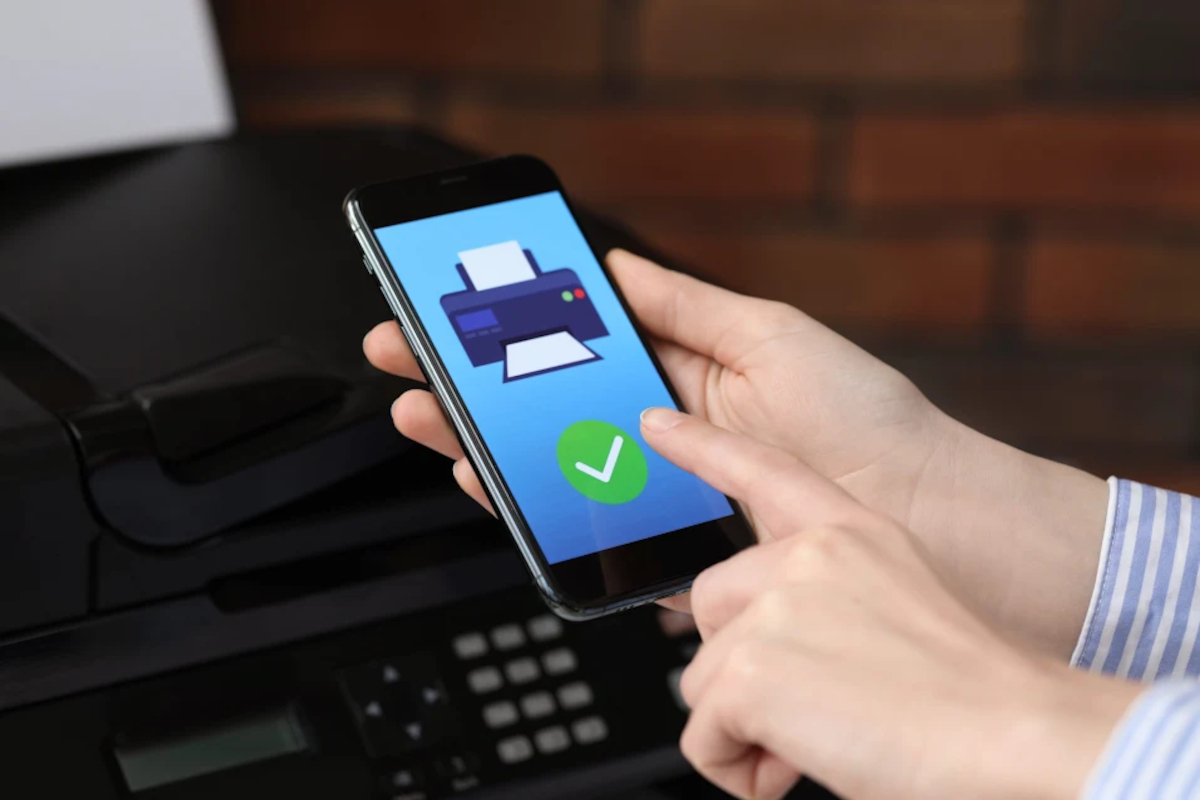
Government employees can send and receive faxes from any location - whether working from home, traveling between offices, or responding to emergencies. With eGoldFax, faxing is seamless from integrated MFPs, computers, or smartphones, and multiple faxes can be sent and received simultaneously - no more queueing at the machine. This flexibility proved invaluable during the pandemic and continues to support hybrid work arrangements that help agencies attract and retain talent.
The eGoldFax Desktop App goes further: users can tag faxes to identify and name them for sorting and searching, apply custom cover pages that enforce agency fax standards, and rely on workflow automation that sweeps file folders to integrate faxing into existing processes. Integration with business applications and databases via XML and SQL lets fax data flow into systems agencies already use.
The impact is measurable. One law firm handling approximately 5,000 fax pages a month across two offices eliminated daily fax bottlenecks at the MFP - inbound faxes no longer block outbound faxing, and staff no longer queue to meet court filing deadlines.
Cloud faxing also provides built-in redundancy and disaster recovery capabilities. Unlike physical machines that fail or become inaccessible during emergencies, cloud services maintain availability even when physical offices are closed.
Implementing Cloud Faxing in Government Settings
Successful cloud faxing implementation requires careful planning that addresses the unique requirements of government operations. Agencies should prioritize solutions that offer robust security features, compliance certifications, and reliable support. Integration capabilities with existing software solutions and document management systems streamline workflows and maximize efficiency gains.
Working with experienced technology partners who understand government requirements ensures smooth transitions. Comprehensive managed IT services can handle the technical aspects of implementation while training staff on new processes and maintaining system reliability.
Key Features for Government Cloud Faxing
When evaluating cloud faxing solutions, government agencies should look for:
- Encryption: TLS 1.2 and HTTPS for data in transit, 256-bit AES encrypted PDFs at rest
- Compliance certifications: PCI-DSS Level 1, HIPAA with Business Associate Agreements (BAAs)
- Number portability: FCC-compliant porting so agencies keep existing fax numbers
- Direct routing: DID fax numbers that deliver directly to individual users
- Integration capabilities: Compatibility with email systems, document management platforms, workflow tools, plus XML and SQL integration with business applications and databases
- Audit logging: Comprehensive tracking of all fax activities and a 10+ year fax archive
- Admin controls: HTTPS-secured admin portal with 2FA for users, routing, reports, and archive
- Scalability: Capacity to handle volume fluctuations without service degradation
- Redundancy: Multiple data centers and failover capabilities
The Future of Government Document Transmission
While cloud faxing provides an immediate solution to current challenges, it also serves as a bridge to more advanced document exchange methods. As regulations evolve and agencies develop more sophisticated digital capabilities, cloud faxing platforms can integrate with emerging technologies while maintaining backward compatibility with traditional fax.
Government agencies that implement cloud faxing now position themselves for future innovations while immediately realizing cost savings and efficiency improvements. The technology respects the legitimate reasons fax persists in government while eliminating the operational burdens that traditional fax machines create.
Modernize Your Document Transmission Infrastructure
Government agencies don't have to choose between compliance and efficiency. Cloud faxing solutions like eGoldFax offer a practical path forward that honors regulatory requirements while delivering the benefits of modern technology. If your organization continues to rely on traditional fax machines, now is the time to explore how cloud solutions can reduce costs, improve security, and support your mission more effectively.
Forward TS has helped organizations transition to modern communication infrastructure while maintaining compliance and reliability. Our team understands the unique requirements government agencies face and can design solutions that meet your specific needs. Contact us to discuss how cloud faxing and comprehensive managed print services can modernize your document workflows without compromising the security and compliance standards your agency requires.
Posted in: Print Services