

Section 179 for Office Equipment, in Plain English
December 1st, 2026
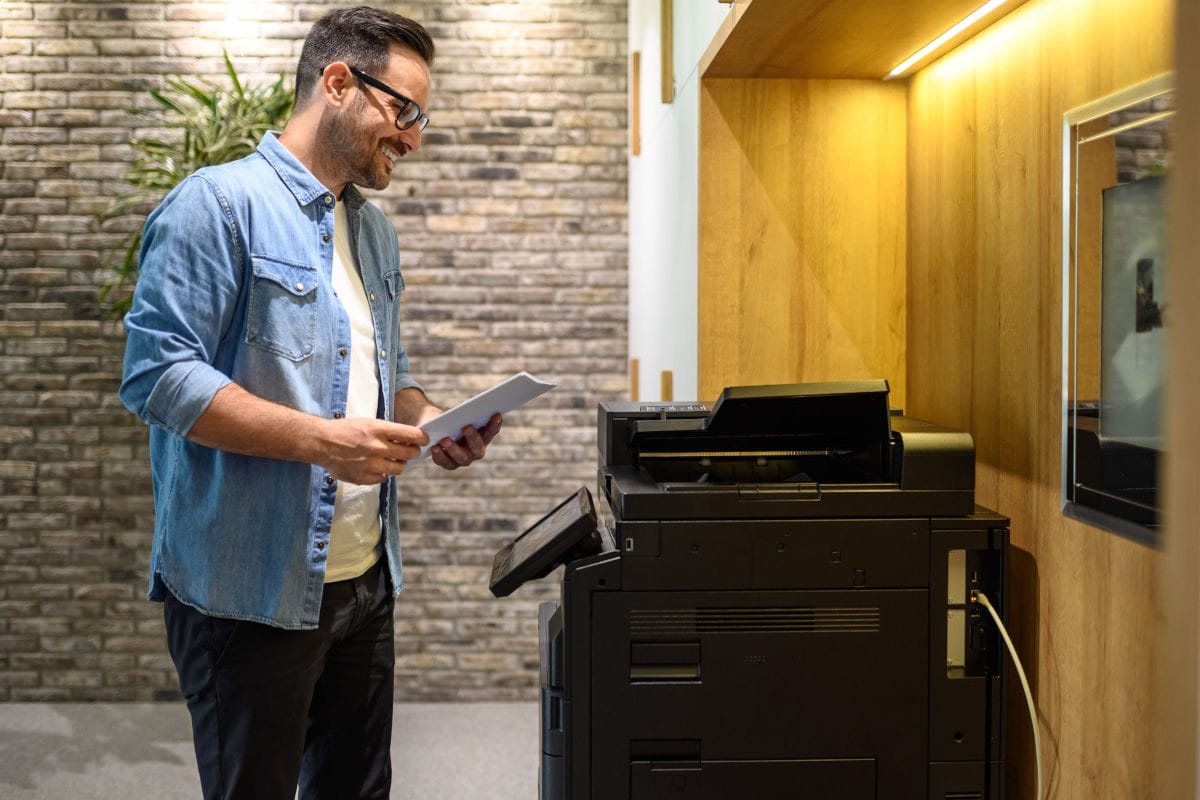
Every December, somebody in the office asks the same question in a slightly different way. If we buy the copier this month, can we write the whole thing off? The answer is usually yes, but not because of the copier. It comes down to two things that are easy to get right and just as easy to get wrong: the date the equipment actually starts working, and the paperwork that follows it.
This is not tax advice. Your accountant knows your business, and a good one is worth the phone call. What this is, is the plain-English version of Section 179 - what it does, what it covers in a normal office, and where people trip over it every single December.
What Section 179 actually does
When a business buys equipment, the usual rule is to spread the cost over several years. That is depreciation. Section 179 is the shortcut. It lets you deduct the full eligible cost in the year the equipment is placed in service, up to a limit.
It does not write you a check. It lowers the profit you pay tax on. A $15,000 copier does not cost $15,000 less. But if the business had a decent year, the deduction can take a real bite out of the tax bill, and that is the whole point.
An easy example. Say the business made $100,000 this year and buys $15,000 of equipment that qualifies. Deduct the whole $15,000, and the business is taxed on $85,000 instead. At a combined rate around 25 percent, that is roughly $3,750 less in tax. The equipment still cost money. The timing just worked in your favor.
That is also why the rule exists. A small business that buys a copier in a good year gets some of the cost back sooner, instead of waiting five years for depreciation to catch up. The cash flow helps more than the accounting does.
The 2026 numbers, quickly
For 2026, the deduction caps at $2,560,000. It starts phasing out once qualifying purchases pass $4,090,000, and it is gone by $6,650,000. If you are buying a copier, a few laptops, and a phone system, you are nowhere near any of that. The cap matters to factories and farms, not to a 20-person office.
Two limits do apply to small businesses. The deduction cannot exceed the business's taxable income. If the year was a loss, you may not be able to use all of it, though the unused amount carries forward. And the equipment has to be used more than half the time for business.
What happens in a slow year
The income limit is the part that surprises people. Section 179 can only reduce the profit from the business. It cannot turn a profit into a loss. If the company made $20,000 and bought $60,000 of equipment, it can deduct $20,000 this year and carry the rest forward. The equipment still qualifies. The deduction just waits.
That is one reason a good accountant asks about the year before the purchase, not after. A business having a strong year may want to move a purchase up. A business having a slow year may be better off with bonus depreciation, or with waiting until January. Same machine, different answer.
What counts in an office
More than people expect. Copiers and multifunction printers, printers, wide-format machines, phone systems, laptops, desktops, servers, monitors, conference displays, network equipment, and office furniture all generally qualify. Off-the-shelf software usually does too. Custom software built just for your business usually does not.
Used equipment counts as well, as long as it is new to your business and bought from an unrelated seller. Vehicles have their own rules and their own caps, so ask before assuming the truck works the same way as the copier.
For most offices, the short version is simple. The things you were going to buy anyway - Sharp copiers, business laptops, a Zultys phone system - are the things Section 179 was written for.
The deadline is placed in service, not ordered
This is the mistake that costs people the deduction. The equipment has to be ready and available for its intended use by December 31. Ordered in December and installed in January does not count for this year. A signed contract and a deposit do not count either.
A copier that arrives on December 28 and sits in the hallway in its box until the 4th was not placed in service. For a copier, that usually means delivered, installed, connected, and working. Ask for the installation date in writing and put it on the calendar. December install schedules fill up, and a snowstorm on the 22nd does not care about your tax return.
Buy, finance, or lease?
Cash is simple. A finance agreement or a lease with a $1 buyout is generally treated like a purchase, so it can qualify. A true lease or rental is different. You deduct the payments as an ordinary business expense, and Section 179 usually does not enter the picture. That is not necessarily worse - it is just a different tax treatment. Ask which kind of lease you are signing before you sign it.
The number to ask for is the buyout. A $1 buyout means you own the machine at the end. A fair market value lease means you can buy it, walk away, or trade it in, and the tax treatment follows that structure. It is worth one question before the paperwork shows up.
Bonus depreciation, in one paragraph
Section 179 has a quieter partner. For 2026, 100 percent bonus depreciation is available for qualified property acquired and placed in service after January 19, 2025. It has no dollar cap and no business-income limit, and unlike Section 179 it can create a loss. Most accountants use Section 179 first and bonus depreciation on what is left. You do not have to choose between them, but you do have to tell your accountant what you bought and when it went to work.
The question behind the question
Most people asking about Section 179 are not really asking about tax law. They are asking whether now is a good time to spend money. The honest answer is that the deduction helps most when the business is profitable, the equipment is needed, and the purchase was going to happen soon anyway. If all three are true, December is a fine time to move. If the machine is a want dressed up as a tax strategy, the deduction does not make it a good deal.
The mistakes we see every December
- Ordering too late. The last realistic install date is earlier than the last business day.
- Confusing delivery with installation. A box in the hallway is not in service.
- Assuming Wisconsin follows the federal rules exactly. It does not always. State treatment can differ, and that changes the answer.
- Buying something you do not need for the deduction. A deduction is a discount, not free money. Do not let the tax tail wag the office dog.
- Waiting until April to mention it. The election is made on Form 4562 with the return, but the decisions happen in December.
How to make it easy
- Decide what the office actually needs, not what happens to be on sale.
- Get a written quote and a realistic install date.
- Have it installed and working before December 31.
- Keep the invoice, the serial numbers, and the install ticket.
- Call your accountant before the year ends, not after.
- File Form 4562 with the return.
That is the whole thing. Section 179 is not complicated once the calendar is on your side. The equipment has to be real, it has to be working, and it has to be for the business. Everything else is paperwork.
Forward TS sells and installs the equipment this usually applies to - Sharp copiers, business laptops, phone systems, and managed print services that keep them running after the tax return is filed. If you are trying to get something installed before the 31st, call now. We will tell you honestly whether the schedule has room.
For the other half of December - the parties, the cards, and the small chores that still have a deadline - see our year-end office checklist. To talk through a purchase or a lease, contact us.